Skip to content
Magna Studio
Menu

Service area · London Borough of Camden

Architectural Designers in Camden

Magna Studio prepares planning and Building Regulations drawings for homeowners across the London Borough of Camden. Most of our work here is on Victorian terraces in Kentish Town, Camden Town, West Hampstead and Gospel Oak: side-return and wraparound extensions, rear dormers and mansard roofs, plus conservation-area applications in Hampstead, Belsize Park, Primrose Hill and Bloomsbury where the design bar is high.

Indicative fee in two minutes. Written fixed-fee quote within 24 hours.

Planning authority
Camden
Decision time
8 weeks statutory
Common work
Rear extension
Quote
Within 24 hours
01Local context

Typical homes we work on in Camden

  • Victorian terraces in Kentish Town, Camden Town, Gospel Oak, West Hampstead and Kilburn
  • Georgian terraces and squares in Bloomsbury, Fitzrovia, Somers Town and Hampstead village
  • Stucco villas, semi-detached villas and mansion blocks in Belsize Park and Primrose Hill
  • Edwardian mansion flats and converted houses in Swiss Cottage and Fortune Green
  • Post-war council estates, including Alexandra Road, Gospel Oak and Maiden Lane
03Constraints

Planning constraints in Camden

What changes the planning route in this area. Always confirm on the council's constraints map before relying on permitted development.

Conservation areas

Camden has around 40 conservation areas covering a large share of its housing, including Hampstead, Belsize, Primrose Hill, Bloomsbury, Kentish Town, Fitzjohns/Netherhall and West End Green. Roof extensions are not permitted development inside them, and each area has a published appraisal and management strategy that officers apply closely.

Source · Checked 15 Sept 2026

Camden Planning Guidance (CPG)

Camden publishes a suite of Camden Planning Guidance documents, including Home Improvements, Design, Amenity and Basements. They set expectations for rear extension depth and height, roof extensions, dormers and the 45-degree test. We design to them from the first sketch.

Source · Checked 15 Sept 2026

Basements – Local Plan Policy A5

Camden's basement policy is one of the strictest in London. Basements are generally limited to one storey, must not extend beyond half the garden, and require a Basement Impact Assessment covering ground conditions, hydrology and structural stability, usually with independent audit. Budget for specialist input.

Source · Checked 15 Sept 2026

Listed buildings

Camden has thousands of listed buildings, concentrated in Bloomsbury, Hampstead, Highgate and Primrose Hill. Listed building consent is needed for almost any alteration, internal or external, in addition to planning permission.

Source · Checked 15 Sept 2026

Article 4 directions

Camden has Article 4 directions in a number of conservation areas removing permitted development for front alterations and other works, and a direction restricting Class MA commercial-to-residential conversions in the Central Activities Zone and some town centres. Check the council's constraints map before relying on permitted development or prior approval.

Source · Checked 15 Sept 2026

Protected views and Hampstead Heath

Protected views from Parliament Hill and Kenwood under the London View Management Framework, plus the setting of Hampstead Heath, constrain height and roof additions in Hampstead, Dartmouth Park and Gospel Oak.

Source · Checked 15 Sept 2026

What London Borough of Camden planning officers look for

Camden is one of the more demanding London authorities for householder work. Officers apply the CPG documents closely and pay particular attention to the uniformity of terrace rear elevations, the depth and height of rear extensions relative to neighbours, and roof additions in conservation areas, where a mansard or dormer is often only accepted if it matches an established pattern in the terrace. Front dormers and full-width box dormers are routinely refused. Camden offers a paid pre-application service and we strongly recommend it for anything in a conservation area or involving a basement. Decisions frequently run past the statutory 8 weeks; allow 12–16 weeks.

Extensions and loft conversions in Camden

Camden’s housing is overwhelmingly Victorian and Georgian, much of it in conservation areas. The Victorian terraces of Kentish Town, Camden Town, Gospel Oak and West Hampstead take the classic London side-return infill and L-shaped wraparound extension, opening the ground floor into a single kitchen-dining space. On the roof, a rear dormer or, where the terrace already has them, a mansard adds a bedroom and bathroom.

In Hampstead, Belsize Park and Primrose Hill the stucco villas and semi-detached houses often carry two-storey rear additions and basement extensions, but the design bar is high. In Bloomsbury and Fitzrovia most houses are listed and divided into flats, so work is usually internal alterations and flat conversions with listed building consent.

Planning constraints in Camden

  • Around 40 conservation areas, each with an appraisal and management strategy; roof extensions are not permitted development (PD) inside them.
  • Camden Planning Guidance on Home Improvements, Design, Amenity and Basements governs extension depth, height and dormer form.
  • Basement Policy A5 limits basements to one storey and demands a Basement Impact Assessment.
  • Thousands of listed buildings, especially in Bloomsbury and Hampstead.
  • Article 4 directions in several conservation areas and for Class MA in the Central Activities Zone.
  • Protected views from Parliament Hill and Kenwood constrain height in the north of the borough.

What Camden planning officers look for

Officers assess householder applications against the Camden Local Plan (2017) and the CPG documents. They look for rear extensions that respect the pattern of the terrace, sit below the neighbour’s first-floor sill and keep clear of the 45-degree line; roof extensions that match established precedent in the run of houses; matching London stock brick, slate and timber sash windows; and no loss of daylight or outlook to neighbours. Front dormers, full-width box dormers and extensions deeper than both neighbours are the standard refusals. Camden offers paid pre-application advice and we strongly recommend it. Council fees from April 2025 are £528 for a householder application and £264 for a proposed-use LDC; verify before applying.

Our services in Camden

Example projects nearby

Guides

Read Conservation areas: extensions and lofts and Householder planning applications in London.

Ready to start in Camden? Get an instant estimate: your indicative fee on screen and by email in two minutes, then a written fixed-fee quote within 24 hours.
04Examples

Example projects in and around Camden

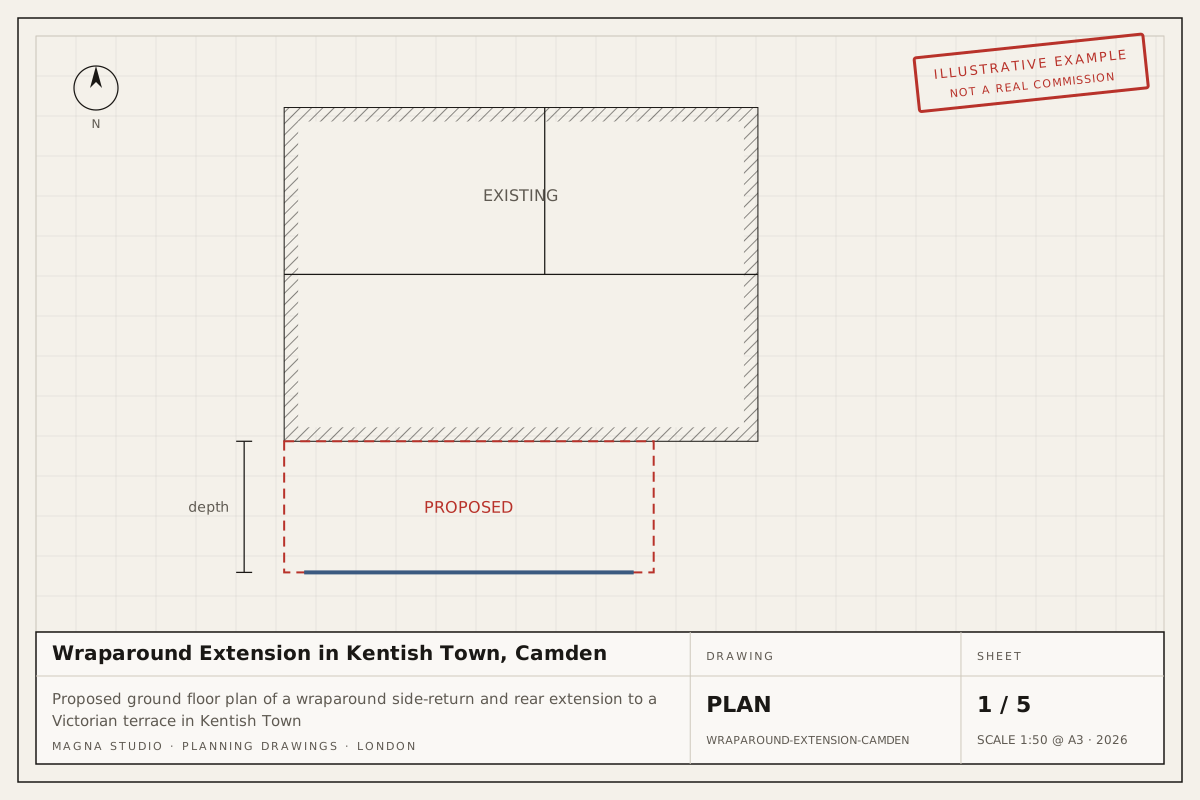
Proposed ground floor plan of a wraparound side-return and rear extension to a Victorian terrace in Kentish TownExample project
Wraparound extensionKentish Town, Camden

Wraparound Extension in Kentish Town, Camden

Side-return infill and 3 m rear extension forming a wraparound kitchen-dining room on a Victorian terrace in a Kentish Town conservation area, with steelwork bearing on both party walls.

Typical route: Pre-application advice, then a householder planning application

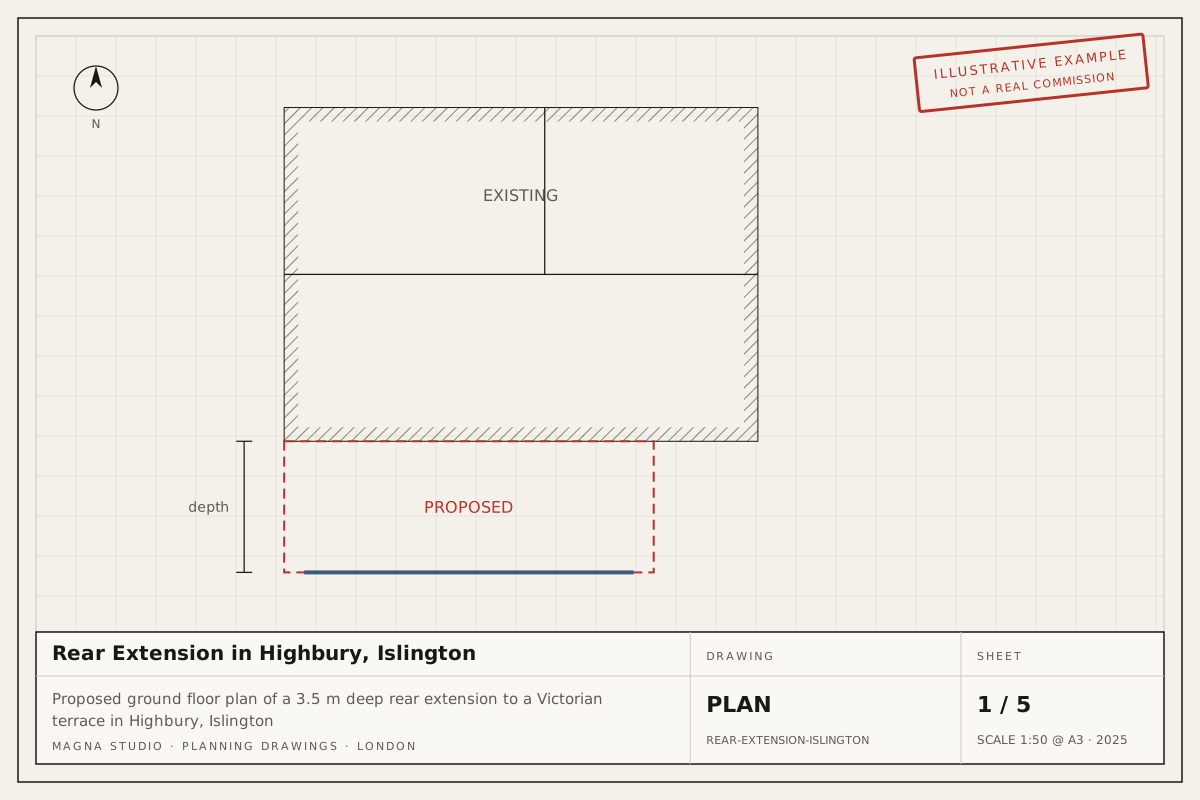
Proposed ground floor plan of a 3.5 m deep rear extension to a Victorian terrace in Highbury, IslingtonExample project
Rear extensionHighbury, Islington

Rear Extension in Highbury, Islington

Full-width single-storey rear extension, 3.5 m deep with three rooflights, to a Victorian terrace in a Highbury conservation area, creating an open kitchen and dining room.

Typical route: Householder planning application in a conservation area

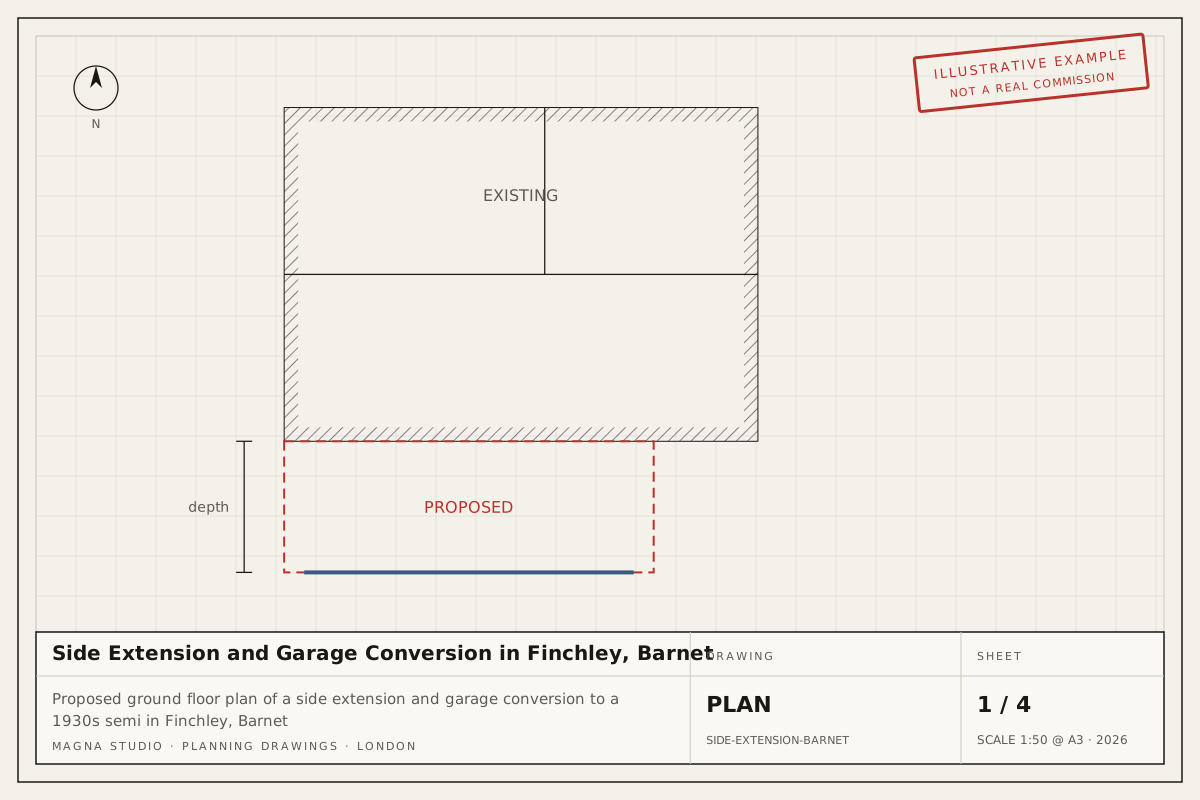
Proposed ground floor plan of a side extension and garage conversion to a 1930s semi in Finchley, BarnetExample project
Side extensionFinchley, Barnet

Side Extension and Garage Conversion in Finchley, Barnet

Conversion of an attached garage and a single-storey side extension behind it to a 1930s semi-detached house, widening the kitchen and adding a utility room and WC.

Typical route: Householder planning application, as the width exceeds the PD limit

05Questions

Planning questions we hear in Camden

Do I need planning permission for a rear extension in Camden?

In most of Camden, yes in practice. Permitted development still exists for houses outside conservation areas and Article 4 areas, but a large share of the borough is designated, and flats have no PD rights at all. Where PD does apply we secure a Lawful Development Certificate; otherwise we prepare a full householder application designed to the Camden Planning Guidance.

Can I convert my loft under permitted development in Camden?

Only if your house is outside a conservation area and no Article 4 direction applies, and only for a house rather than a flat. In Kentish Town, Hampstead, Belsize Park or Bloomsbury conservation areas a roof extension needs planning permission, and officers expect it to follow the established pattern in the terrace.

What are Camden's basement rules?

Local Plan Policy A5 limits basements to a single storey, restricts their footprint beneath the garden and requires a Basement Impact Assessment by qualified engineers, usually independently audited. Expect a longer programme and specialist fees on top of the planning package.

How long does Camden council take to decide a householder application?

The statutory period is 8 weeks from validation, and 8 weeks for a Lawful Development Certificate. Camden is a busy authority and frequently agrees an extension of time, so we advise allowing 12–16 weeks and using pre-application advice to reduce the risk of amendments.

Is pre-application advice worth it in Camden?

Usually, yes. Camden charges for pre-application advice, but for conservation area extensions, roof works and basements the written response tells you what the case officer will accept before you commit to a full application. We prepare the pre-app drawings and incorporate the feedback into the submission.

Next step

Planning a project in Camden?

Answer six questions and your indicative fee for Camden arrives on screen and by email in two minutes, with a written fixed-fee quote within 24 hours.