Skip to content
Magna Studio
Menu

Service area · London Borough of Bromley

Architectural Designers in Bromley

Magna Studio prepares planning and Building Regulations drawings for homeowners across the London Borough of Bromley, the capital's largest borough by area. Typical projects are rear and side extensions on 1930s semis in Orpington, West Wickham and Hayes, loft conversions on Edwardian houses in Beckenham and Bickley, garden rooms and annexes on the generous plots of Chislehurst and Petts Wood, and conservation area work in the borough's many protected streets.

Indicative fee in two minutes. Written fixed-fee quote within 24 hours.

Planning authority
Bromley
Decision time
8 weeks statutory
Common work
Rear extension
Quote
Within 24 hours
01Local context

Typical homes we work on in Bromley

  • 1930s semi-detached houses in Orpington, West Wickham, Hayes, Bromley Common and Mottingham
  • Edwardian and interwar detached houses in Bickley, Chislehurst, Petts Wood and Sundridge Park
  • Victorian terraces and villas in Penge, Beckenham, Anerley and Shortlands
  • Large houses on wide plots in Keston, Farnborough, Chelsfield and Biggin Hill village
  • Post-war estates and 1960s–70s townhouses, including the Cator Estate fringe at Beckenham
03Constraints

Planning constraints in Bromley

What changes the planning route in this area. Always confirm on the council's constraints map before relying on permitted development.

Conservation areas

Bromley has numerous conservation areas, including Chislehurst, Petts Wood, Bickley Park, Beckenham Place, Sundridge Park, Keston and several around Bromley town centre. Roof extensions are not permitted development inside them and extensions are expected to be clearly subordinate. Check the council's constraints map for your address.

Source · Checked 15 Sept 2026

Areas of Special Residential Character

Bromley designates Areas of Special Residential Character in the Local Plan, where the spaciousness of plots and gaps between houses is protected. Side extensions that close the gap to the boundary and bulky roof additions are resisted in these areas.

Source · Checked 15 Sept 2026

Green Belt and Metropolitan Open Land

Roughly half of the borough is Green Belt or Metropolitan Open Land, taking in Keston, Downe, Cudham, Biggin Hill, Chelsfield and Pratts Bottom. Extensions must not be disproportionate to the original house, and outbuildings are judged strictly. We check the designation before drawing.

Source · Checked 15 Sept 2026

Article 4 directions

Several Bromley conservation areas, including parts of Chislehurst and Petts Wood, have Article 4 directions removing permitted development for front-facing alterations, boundary treatments or roof works. The exact restrictions vary by street, so confirm on the council's constraints map before building under PD.

Source · Checked 15 Sept 2026

Supplementary Planning Guidance on residential design

Bromley's SPG on general design principles and residential design guidance sets out expectations for extension depths, roof alterations and spacing between houses. Officers refer to it alongside the Local Plan.

Source · Checked 15 Sept 2026

Flood risk – Ravensbourne, Cray and Beck

The River Ravensbourne, Cray, Beck and Pool River corridors through Beckenham, Shortlands, Bromley and St Mary Cray carry fluvial flood risk. Ground-floor extensions in Flood Zones 2 and 3 may need a flood risk statement.

Source · Checked 15 Sept 2026

What London Borough of Bromley planning officers look for

Bromley officers are protective of suburban spaciousness. Refusals most often cite two-storey side extensions that close the gap between houses or lack a set-back, rear extensions that breach the 45-degree line to a neighbour, and roof extensions in conservation areas or Areas of Special Residential Character. Rear dormers on ordinary semis outside protected areas are usually accepted if they sit below the ridge and inside the roof slope. The council generally offers a paid pre-application service; decisions often run beyond 8 weeks, so allow 10–14 weeks.

Extensions and loft conversions in Bromley

Bromley is the largest London borough by area and one of the most suburban. Its 1930s semis in Orpington, West Wickham, Hayes and Bromley Common sit on wide plots that comfortably take a two-storey side extension, a 4–6 m rear extension and a hip-to-gable loft. The Edwardian and interwar detached houses of Bickley, Chislehurst, Petts Wood and Sundridge Park have deep gardens that suit garden rooms, annexes and single-storey rear extensions with generous glazing.

In Penge, Beckenham and Anerley the Victorian terraces and villas follow the inner-London pattern: side-return infills, rear dormers and, on villas, two-storey rear additions. Many houses in the borough can be extended under permitted development (PD), but the density of conservation areas means we always check before advising a Lawful Development Certificate (LDC) route.

Planning constraints in Bromley

  • Conservation areas such as Chislehurst, Petts Wood, Bickley Park and Sundridge Park remove PD for roof extensions and tighten design expectations.
  • Areas of Special Residential Character protect plot spacing; side extensions that close the gap between houses are resisted.
  • Green Belt and Metropolitan Open Land cover roughly half the borough; extensions must be proportionate to the original house.
  • Article 4 directions in several conservation areas remove PD for front alterations and some roof works.
  • Residential design SPG guides extension depths and roof alterations.
  • Flood risk along the Ravensbourne, Cray, Beck and Pool River.

If you are unsure which of these touch your plot, the council’s constraints map is the place to start, or ask us to check as part of your quote.

What Bromley planning officers look for

Officers assess householder applications against the Bromley Local Plan (2019), its SPG and the London Plan. They test the 45-degree line from the neighbour’s nearest habitable window, the set-back and set-down of two-storey side extensions, the gap retained to the side boundary, and whether roof additions read as subordinate. Overbearing rear extensions and terracing between semis are the most common refusal reasons. The council generally offers a paid pre-application service, which we recommend for Green Belt and conservation area sites. Council fees from April 2025 are £528 for a householder application and £264 for a proposed-use LDC; verify before applying.

Our services in Bromley

Example projects nearby

Guides

Read Permitted development rights in London and Conservation areas: extensions and lofts.

Ready to start in Bromley? Get an instant estimate: your indicative fee on screen and by email in two minutes, then a written fixed-fee quote within 24 hours.
04Examples

Example projects in and around Bromley

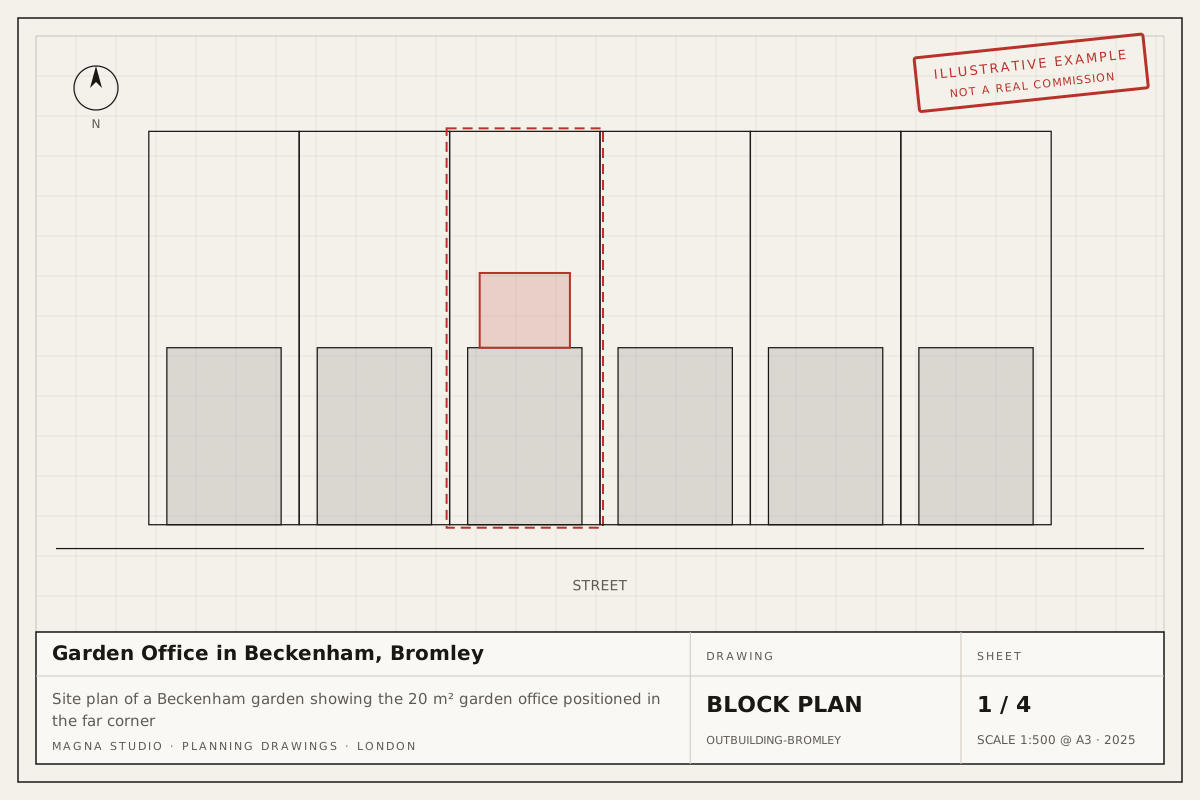
Site plan of a Beckenham garden showing the 20 m² garden office positioned in the far cornerExample project
Outbuilding / garden roomBeckenham, Bromley

Garden Office in Beckenham, Bromley

Insulated 20 m² garden office with a 2.5 m high flat roof, placed within 2 m of the rear and side boundaries of a suburban garden in Beckenham, Bromley.

Typical route: Permitted development under Class E, proved with a Lawful Development Certificate

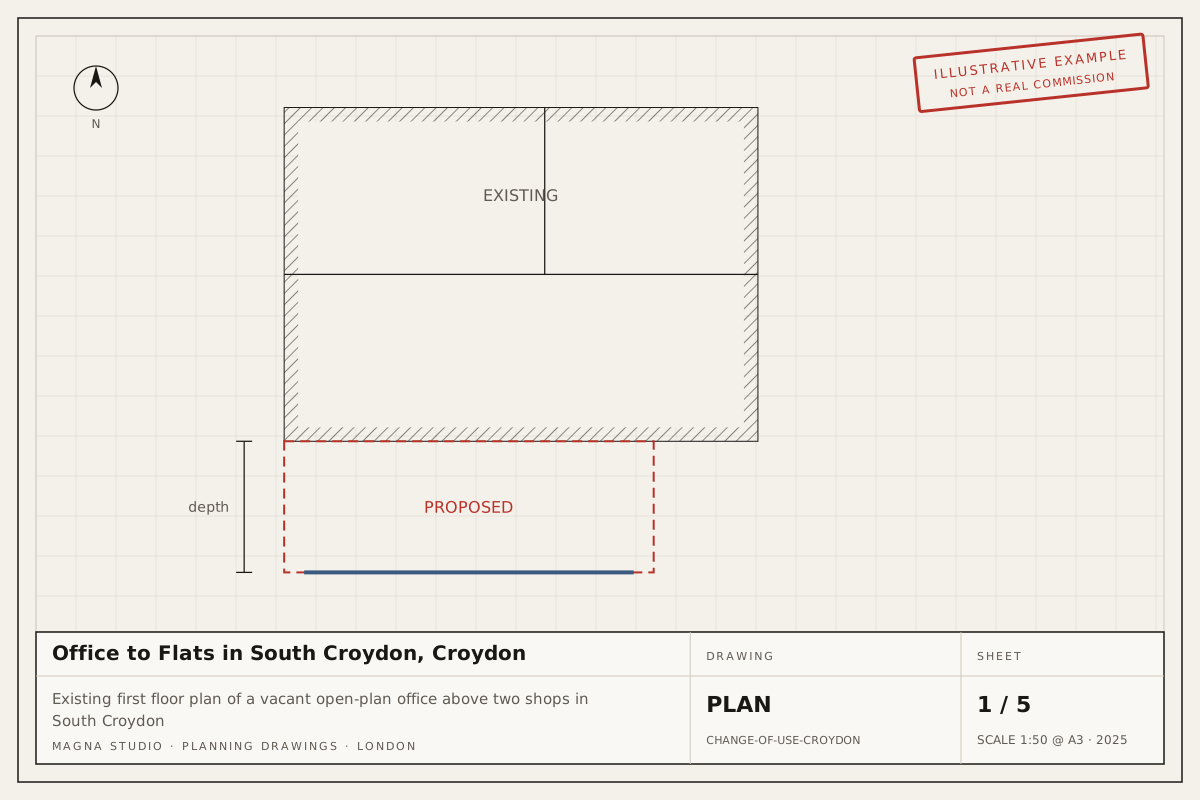
Existing first floor plan of a vacant open-plan office above two shops in South CroydonExample project
Change of useSouth Croydon, Croydon

Office to Flats in South Croydon, Croydon

Conversion of a vacant 110 m² first-floor Class E office above two shops into two one-bedroom flats using the Class MA prior approval route in South Croydon.

Typical route: Class MA prior approval, decided within 56 days

05Questions

Planning questions we hear in Bromley

Do I need planning permission for a rear extension in Bromley?

Often not. Outside conservation areas and Article 4 areas, a single-storey rear extension up to 3 m on a semi or 4 m on a detached house is usually permitted development, or 6 m / 8 m via prior approval (42 days). Green Belt plots and Areas of Special Residential Character need more care, so we check first.

Can I build a garden room or annexe in Bromley under permitted development?

Usually yes. An outbuilding up to 2.5 m high within 2 m of a boundary (4 m for a dual-pitched roof elsewhere) for incidental use such as a studio, gym or office is normally lawful, provided it covers no more than half the garden. In the Green Belt or a conservation area the rules change; sleeping accommodation always needs permission.

Can I convert my loft under permitted development in Bromley?

On a 1930s semi in Orpington or West Wickham outside a conservation area, usually yes: a hip-to-gable and rear dormer within 50 m³ is typically lawful, with nothing to the front. In Chislehurst, Petts Wood, Bickley Park and other conservation areas roof extensions need planning permission.

How long does Bromley council take to decide a householder application?

The statutory period is 8 weeks from validation for planning applications and Lawful Development Certificates. Bromley frequently agrees an extension of time, so we advise allowing 10–14 weeks, especially for conservation area or Green Belt sites.

What is an Area of Special Residential Character in Bromley?

It is a Local Plan designation protecting streets with unusually spacious plots, mature landscaping and consistent building lines. Extensions are still possible, but side additions that narrow the gap between houses and bulky roof alterations are usually refused. We check the designation as part of your quote.

Next step

Planning a project in Bromley?

Answer six questions and your indicative fee for Bromley arrives on screen and by email in two minutes, with a written fixed-fee quote within 24 hours.