The permitted development rules for wraparound extensions
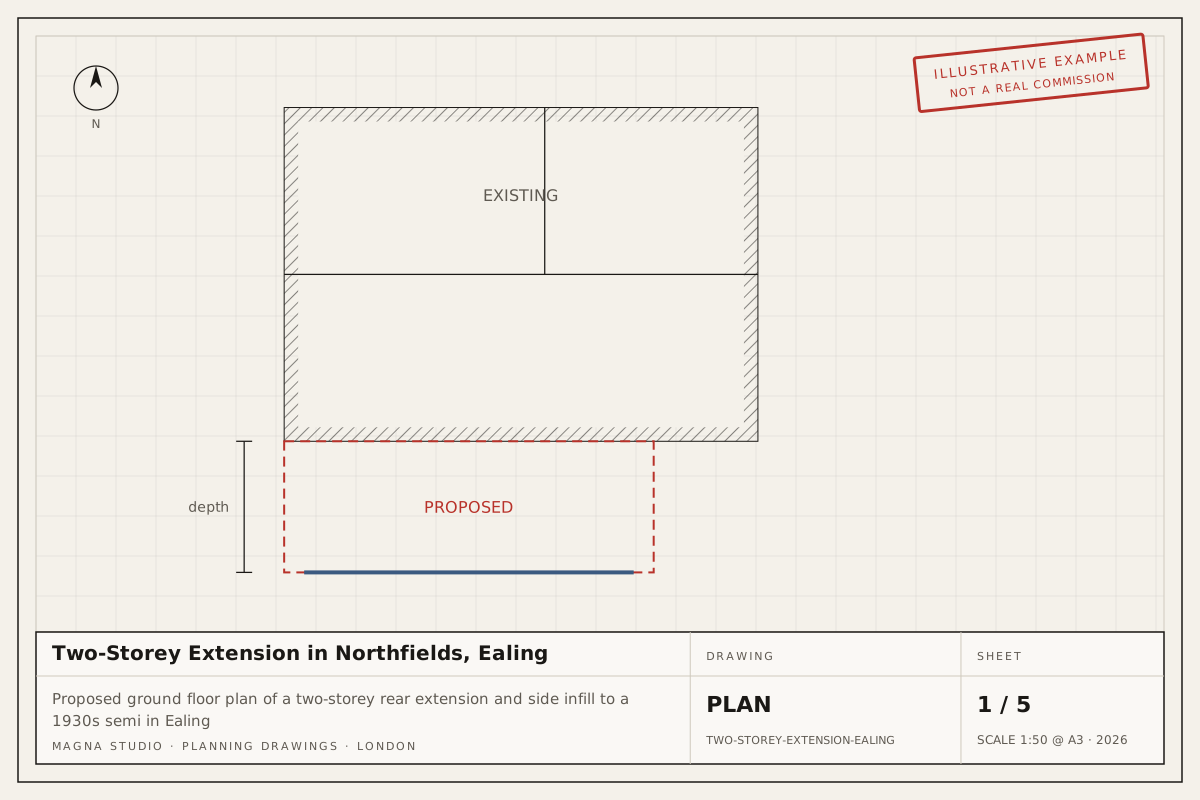
A wraparound combines a side-return infill with a rear extension. Permitted development assesses each part separately, so the side element must stay within half the width of the original house and the rear element within 3 m or 4 m, and the two together must not exceed 50 per cent of the land around the original house.
Because the combined footprint is treated as an extension wrapping the corner, most wraparounds on London terraces fall outside permitted development and need a householder planning application. A Lawful Development Certificate is worth pursuing only where each element clearly meets its own limits.
What changes in Hounslow
The side element is not permitted development in a conservation area, so a wraparound there always needs planning permission, designed to the area's appraisal.
The local constraints that most often decide the route in Hounslow are listed below, taken from our Hounslow area page. Each one is a reason to confirm the address on Hounslow's constraints map before relying on permitted development.
- Conservation areas. Hounslow has numerous conservation areas, concentrated in Chiswick (including Bedford Park, Strand-on-the-Green and Chiswick House), Brentford and Old Isleworth. Roof extensions and side extensions in these areas need planning permission rather than permitted development. Check the council's constraints map before assuming permitted development rights apply. Source
- Article 4 directions. Bedford Park has long-standing Article 4 directions removing permitted development rights for external alterations, so even minor changes to windows, roofs and front gardens need permission. Other conservation areas in the borough may also be covered; ask the council or check the constraints map before starting design.
- Thames flood zones. Land close to the Thames at Chiswick, Brentford and Isleworth falls within Flood Zones 2 and 3. Basements and habitable rooms at ground level may need a flood risk assessment even for a householder application. Source
- Green Belt and Metropolitan Open Land. Osterley Park, parts of Hanworth, Cranford and the Duke of Northumberland's River corridor are Green Belt or Metropolitan Open Land. Outbuildings and extensions to houses inside or adjoining these designations are judged more strictly on openness.
What Hounslow planning officers look for
Hounslow generally follows the London-wide conventions for householder extensions: single-storey rear extensions of 3 to 4 m are usually acceptable where they respect the 45-degree rule to neighbours' windows, and refusals most often cite excessive depth, loss of daylight or bulk in two-storey schemes. In Chiswick's conservation areas officers expect traditional materials and resist front dormers and boxy roof extensions. Side extensions on 1930s semis are expected to be set back and subordinate so the gap between houses is not closed. Pre-application advice is available for a fee and is worth using for anything in Bedford Park or on the riverside.
Fees and timelines
The council fee for a householder application is £528 and for a Lawful Development Certificate £264 (England, from 1 April 2025; verify before applying). Both are decided within 8 weeks of validation.
Our own fee for the drawings and the application is fixed once quoted and depends on the project type, its size and the constraints above. Answer six questions in the quote tool and we email you an indicative figure within minutes, then a written fixed-fee quote within 24 hours.